

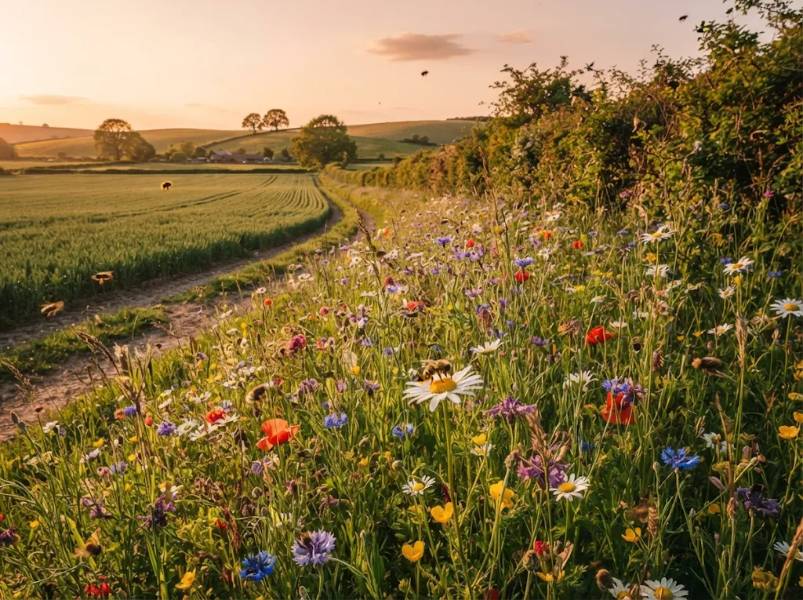
Nearly half of the habitable land on Earth is used for agriculture. That fact makes farmland one of the most important places for biodiversity, and one of the most threatened. Hedgerows disappear, wetlands are drained and fields grow larger and more uniform. Yet many farmers around the world are finding ways to produce food and protect wildlife at the same time.
The idea is simple to state and hard to practise, but the evidence shows it can work.
What Biodiversity Means on a Farm
Biodiversity covers the variety of living things, from soil microbes and insects to birds and mammals, as well as the variety of crops and breeds. A healthy farm has pollinators that visit flowers, predators that control pests and soil organisms that recycle nutrients. These services are often called ecosystem services, and they support yields without extra cost.
The Convention on Biological Diversity sets out global goals for protecting and sustainably using biodiversity, including targets related to agriculture.
Why Farmland Matters for Wildlife
Many species have adapted to traditional agricultural land. Meadow birds nest in grassland, bats feed along hedgerows and farmland amphibians use ponds. When land is managed intensively and uniformly, those habitats vanish. Small features, such as field margins and ponds, hold a surprising share of a farm's wildlife.
Practical Measures That Work
Farmers have many options. Wildflower strips along field edges support pollinators and beneficial insects. Hedgerows and tree lines offer shelter and corridors for movement. Reduced tillage protects soil life. Cover crops keep ground covered in winter and add organic matter. Rotating crops breaks pest cycles and improves soil structure.
Not every measure suits every farm. Climate, soil, crop type and labor all shape what is realistic, so advice from local advisers is valuable.
Reducing Chemical Inputs Wisely
Fertilisers and pesticides can harm wildlife when overused. Precision application, integrated pest management and careful timing reduce quantities while protecting yields. Buffer strips along waterways catch runoff and protect aquatic life. Many farmers find that spending falls as they apply inputs only where they are needed.
Grazing and Grassland
Grasslands rich in flowers and insects depend on appropriate grazing. Too much pressure damages plants and soil, while too little allows scrub to take over. Rotational grazing, late mowing and keeping a mix of grass heights help birds, butterflies and small mammals.
Water, Wetlands and Soil
Restoring wetlands, ditches and ponds improves flood control and creates habitat. Healthy soil holds more water and carbon, and it supports a food web that benefits crops. Simple tests of soil organic matter and earthworm counts give farmers practical signals about progress.
Economics and Incentives
Conservation has costs, and farmers need fair compensation. Public programmes in the European Union, the United States and elsewhere pay for habitat measures, and some markets offer premiums for wildlife friendly products. Cooperative schemes let neighbours coordinate across a whole district, which can deliver bigger benefits than isolated efforts.
Sharing Knowledge Across Borders
Research, guidance and field trials come from many countries, and the best ideas often cross languages. Dutch farmers and researchers, for example, have developed leading approaches to nature inclusive agriculture, and organisations that want to share or adopt them can use Dutch translation services to make technical reports and training material accessible to international partners.
Reading French Language Research
French agronomy and ecology institutes publish a great deal on agroecology and soil health. Translating accurately is demanding because of specialised terms and regional vocabulary. This guide to French to English translation explains how translators approach such texts.
Climate Benefits on the Farm
Practices that help wildlife often help the climate as well. Hedgerows and trees store carbon, healthy soils hold more organic matter and restored wetlands reduce flood peaks during storms. Farms that cut fertiliser use also lower emissions of nitrous oxide, a powerful greenhouse gas. These shared benefits make a strong case for combining goals in a single farm plan.
Starting Small
A farmer who wants to begin does not need to change everything at once. Pick one field edge, sow a flower strip, leave a corner uncut and record what appears. Success on a small plot builds confidence and creates a demonstration that neighbours can visit.
Monitoring and Measuring
Simple monitoring keeps efforts honest. Count butterflies along a fixed route, survey breeding birds each spring, track the area of habitat features and record yield alongside wildlife data. Citizen science projects can help farmers and volunteers collect consistent records at low cost.
Working Together
Farmers, scientists, councils, conservation groups and consumers all have a part. Farmers need clear rules and fair support. Researchers need access to farms. Shoppers can choose products from producers that protect nature. Progress comes fastest when each group listens to the others.
The Path Forward
Feeding people and sustaining nature are not opposites. They are linked goals that depend on the same soil, water and living systems. With thoughtful design, steady support and shared knowledge, farmland can remain productive and also become a refuge for the wildlife that makes the countryside worth living in.
Recent Posts
How Farmland Can Protect Wildl...
Come Proteggere la Fauna nei C...
Cómo Proteger la Fauna en las...
What Is Regenerative Agricultu...
Murs en pierre sèche, un refu...
Explorer la richesse écologiq...
Share it.

Links
We use cookies
We use cookies to give you the best online experience, remember your preferences, and understand how the site is used. You can accept all cookies, reject optional ones, or choose which categories to allow.
Privacy PolicyCookie preferences
Choose which cookies we can use. Necessary cookies stay on because the site cannot work without them.
For more details, read our Privacy Policy.